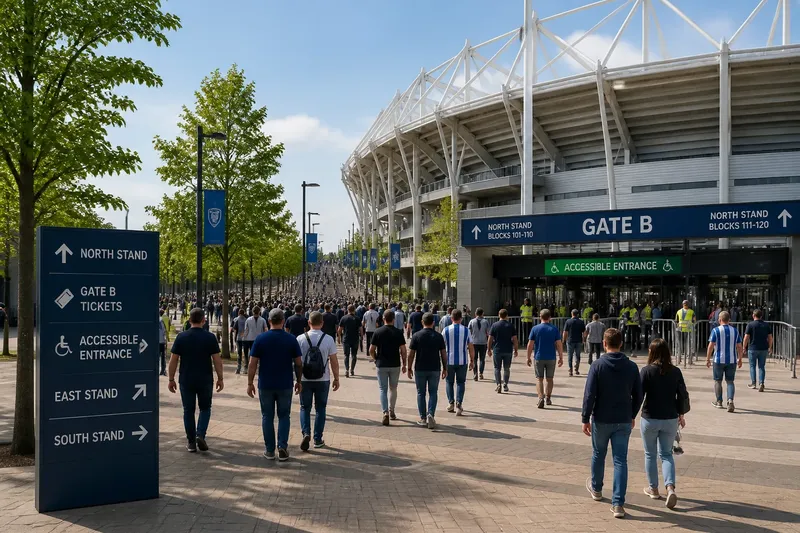
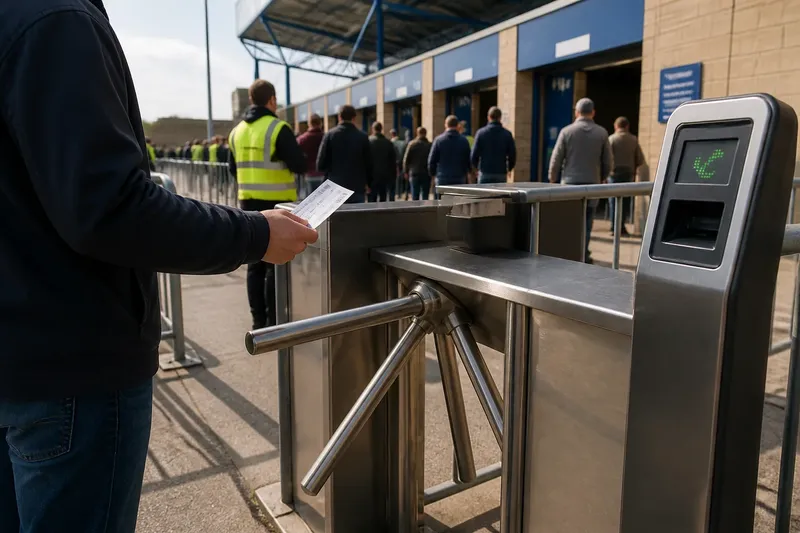
A First Look Around a New Ground Before Taking Your Seat
A first look around a new ground helps you read section and row labels, judge seating access, and locate facilities before settling into the event.
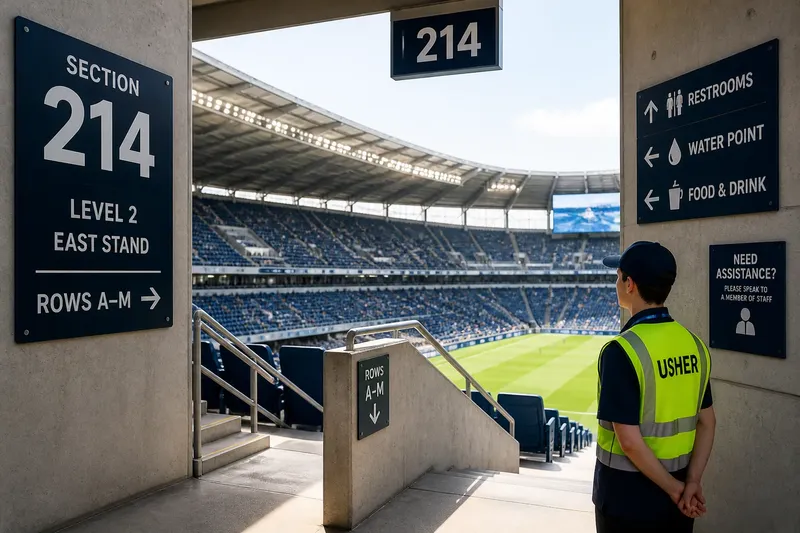
Which details will make it easier to settle into an unfamiliar stadium? A first look around a new ground is most useful when you focus on the section entrance, the seat-number pattern, and the facilities your ticket lets you use. Those details answer practical questions without asking you to memorize the whole venue.
Read the section labels
Section names may appear on a concourse wall, above an opening into the stand, or beside the stairs that serve a seating block. The sign closest to the actual opening is usually the one to match against your ticket; a nearby sign can refer to a different block.
Check the full label, not just its color or a single letter. A stand name, level, and block number may work together to identify your destination, and the same number can appear on more than one level.
At the entrance to your block, look for row markers before stepping into the aisle. Some seating layouts place the first row near the bottom of the stand, while others bring you in near the top. The labels show which pattern applies.
Follow the seating layout
Notice whether the aisle runs uphill or downhill from the block entrance and where row labels are posted. These cues help you choose the right direction before other spectators are trying to pass.
Seat numbers may be attached to the seat backs or displayed at the aisle edge. Check which end of the row has the lower numbers, then follow the sequence toward your assigned seat. If a marker is hidden or unclear, pause at the aisle edge and ask an usher rather than moving through the row to guess.
For step-free access or help reaching a particular seat, use the venue’s current accessibility information or speak with staff. A route to one seating block may not connect to another, so do not infer access from a nearby ramp or passage.
Locate shared facilities
Note the nearest restrooms, water points, and food counters, then check how each connects to your section. A facility can look close from the seating entrance but sit beyond a barrier or along a route that does not lead back to your block.
Signs at concourse junctions can clarify the return route. Queues may obscure a doorway or narrow a passage, so identify a second clearly marked option if one is available. Check signs or ask staff about opening and access rules rather than assuming every facility serves every ticket holder.
Make a seating plan
Say you have a ticket for section 214, row G, seat 18, and the block entrance opens onto an aisle with seat numbers rising in one direction. First, match “214” on the ticket to the sign beside the opening. Next, check the row markers and follow them to G; at the row, read the seat numbers and move toward 18. If the row sequence or section sign does not match, stop before entering and ask an usher. The result is a clear decision at each point, with less chance of crossing the row or blocking other spectators.
It is not worth memorizing every corridor or trying to identify every concession on arrival. A reliable route to your block, a clear sense of the row pattern, and one useful facility connection are enough to get settled.
Which details matter most?
What should I match to my ticket?
Compare the complete section or block label, including any stand or level name, with the sign beside the seating entrance. If the labels conflict, stop at the junction and ask staff instead of choosing by color or proximity.
How do I find my seat number?
Read the row marker first, then check where the seat-number sequence begins. If numbers are missing or obscured, wait at the aisle edge and ask an usher before entering the row.
How do I check facility access?
Use current venue signs to follow the route from your section toward restrooms, water, or food. If the route passes a barrier or its access rules are unclear, ask staff which option is open to you.
What if I need step-free access?
Consult the venue’s current accessibility guidance or speak with staff about the route to your specific block. If a sign does not make that connection clear, ask before taking a ramp or passage that may lead elsewhere.
- Check that the section sign beside the seating opening matches the full ticket label; if it does, enter the block, and if it does not, stop and ask an usher.
- Check whether the row markers are visible from the block entrance; if they are, follow the stated pattern, and if they are not, ask staff before joining the aisle.
- Check which direction seat numbers rise along your row; if the sequence is clear, walk toward your assigned number, and if it is not, pause at the aisle edge and get help.
- Check whether the route to your section uses stairs, a ramp, or a level passage; if it suits your access needs, follow the current signs, and if it does not, ask staff for the designated route.
- Check whether a restroom sign points to a route that returns to your section; if it does, use that route, and if it is blocked or unclear, follow current directions or ask staff.
- Check whether a water point or food counter is open and accessible to your ticket; if it is, use it, and if its status or access is uncertain, confirm with staff or choose another marked option.
A first look around a new ground is easier to use when it centers on the seating details that remain relevant after you arrive: the right section, the row pattern, the seat sequence, and a facility route you can follow. Keep venue staff’s current directions ahead of any plan, especially if access or crowd movement changes.