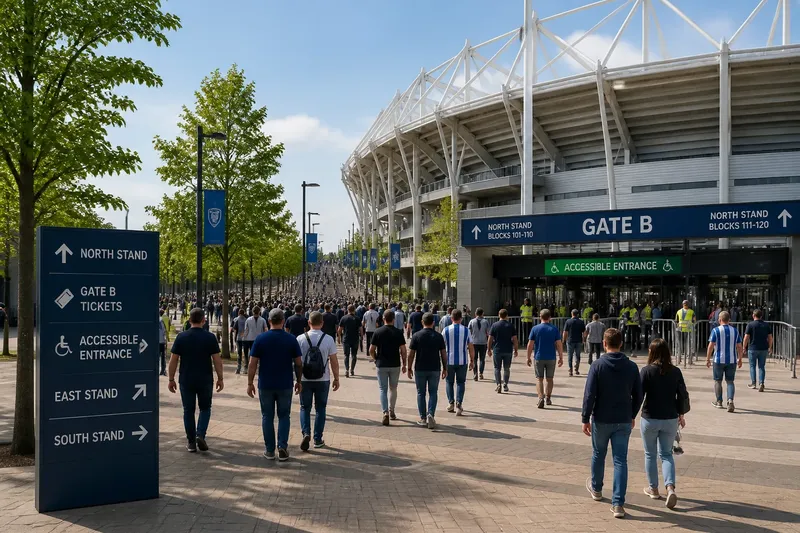
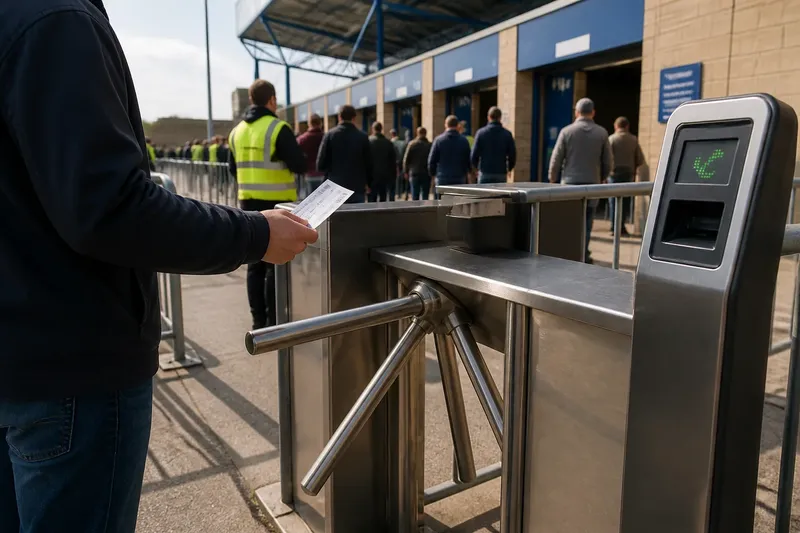
The Stadium Map Myth: One Plan Cannot Show Every Route
A stadium map cannot show every event-day route. Learn how to read venue plans and signs together, handle detours, and choose the right next move.
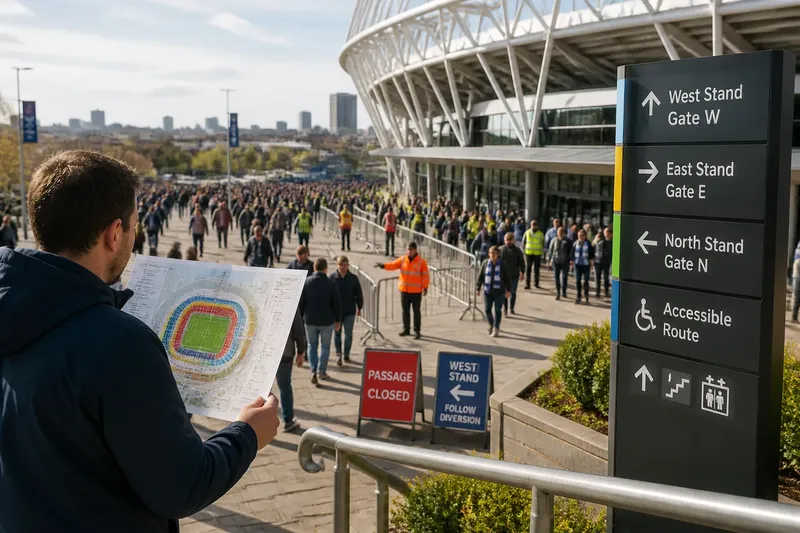
Where should you look when a stadium map points to your section but leaves the route unclear? Stadium wayfinding starts with the map’s limits: it can locate places, but it cannot show every event-day access rule, closed passage, or queue arrangement. Reading it as a complete route can send you toward a path that is no longer available.
Instead of treating the map as a set of turn-by-turn directions, use it to answer specific questions: which entrance serves your ticket, which level contains your stand, and what route should you confirm with venue staff? This approach keeps the map useful without repeating the work of signs and on-site orientation.
Choose the right map
A venue overview usually shows the perimeter, entrances, stands, and nearby streets. It helps you choose an approach and identify the general area of your gate. A detailed seating plan serves a different purpose: it relates sections or blocks to the seating bowl, but may not show how to reach them from outside.
Before setting out, compare the map with your ticket and the venue’s current arrival information. Check the gate name or number, the stand, any listed level, and whether the venue gives a specific approach for your ticket type. If the plan is undated or lacks access details, use it only for broad orientation and seek current instructions from the venue.
It is not worth the effort to memorize every corridor or trace a perfect route on a simplified plan. That detail can become useless as soon as an entrance or passage is managed differently on event day.
Read labels by scale
Venue labels narrow from broad to specific: gate, stand, section or block, then row and seat. A general map may identify only the first two, while signs near the seating bowl provide the later details. Look for the next label you need rather than trying to find every ticket detail on one drawing.
Check the ticket wording carefully. A gate is an entrance, not necessarily the name of the stand it serves; a block is within a stand, not a separate entrance. If the ticket and a sign appear to conflict, stop somewhere out of the flow and ask an usher to clarify before entering a restricted area.
Account for vertical routes
Stadiums often place entrances, concourses, and seating tiers on different levels. On a flat plan, two areas can appear close while a stair, ramp, or lift separates them. Look for level names and access symbols, and check whether a route begins by going up or down before it reaches your section.
If you need a step-free route, consult the venue’s accessibility information for the current event and ask staff when you arrive. A simplified public map may not show controlled doors or the full accessible route from your entrance. For access arrangements that affect your visit, rely on venue staff rather than guessing from the drawing.
Plan for event-day changes
Maps show an arrangement; staff and event-day signs explain how people are being directed at that moment. Barriers can channel arrivals around a queue, while a passage shown on the plan may be closed or reserved. A signed detour may be longer on paper but clearer and more appropriate for the current flow.
Imagine you have a ticket for a west stand and the venue map shows a passage across the central concourse. At the entrance, a barrier blocks that passage and a staff member directs west-stand visitors around the food queue. You follow that instruction, then check the stand sign at the next junction; the result is a route that matches the event-day arrangement, even though it differs from the map.
- Check whether the ticket names a gate; if it does, approach that entrance, but if the label is missing or unclear, ask venue staff which entrance serves your stand.
- Check whether the overview map marks your stand; if it does, use it to choose the broad approach, but if it does not, consult the venue’s current seating or arrival plan.
- Check whether your route crosses a level change; if stairs are shown and you can use them, follow the signed stair route, but if not, ask staff for the designated step-free path.
- Check whether an event-day barrier blocks the mapped passage; if it does, follow the staff direction or detour sign, but if neither is clear, pause at the edge and ask an usher.
- Check whether a sign names your stand or block at a junction; if it does, follow that direction, but if the wording differs from your ticket, confirm it with staff before proceeding.
- Check whether the venue’s map is current; if it includes event-day access details, use those for arrival planning, but if its status is unclear, treat it as an overview and verify the route with the venue.
Where should I look first?
What should I check before arriving?
Match your ticket’s gate and stand to the venue overview, then check current arrival instructions for your event. If the gate is not specified, use the venue’s guidance to identify the entrance serving your stand.
What if the sign contradicts the map?
Check whether it directs people around a barrier, queue, or closed passage. Follow a clear current instruction; if it does not appear to lead toward your ticketed area, ask an usher before continuing.
What if my ticket labels do not match?
Pause somewhere that does not obstruct movement and show the ticket to an usher. Ask them to identify the correct stand, block, or entrance before entering a restricted area.
Can a phone map show the full route?
A phone map can help locate the stadium or show its broad layout, but it may not reflect event-day closures or crowd controls. Use it for context and check current signs or staff directions on site.
Keep the map in its role
A stadium map is most useful when it answers the broad question of where your destination sits, while current venue instructions answer how to reach it today. Check the gate and level before arrival, then verify any changed access route with staff. For stadium map wayfinding, that distinction is more dependable than memorizing a sequence of turns.